
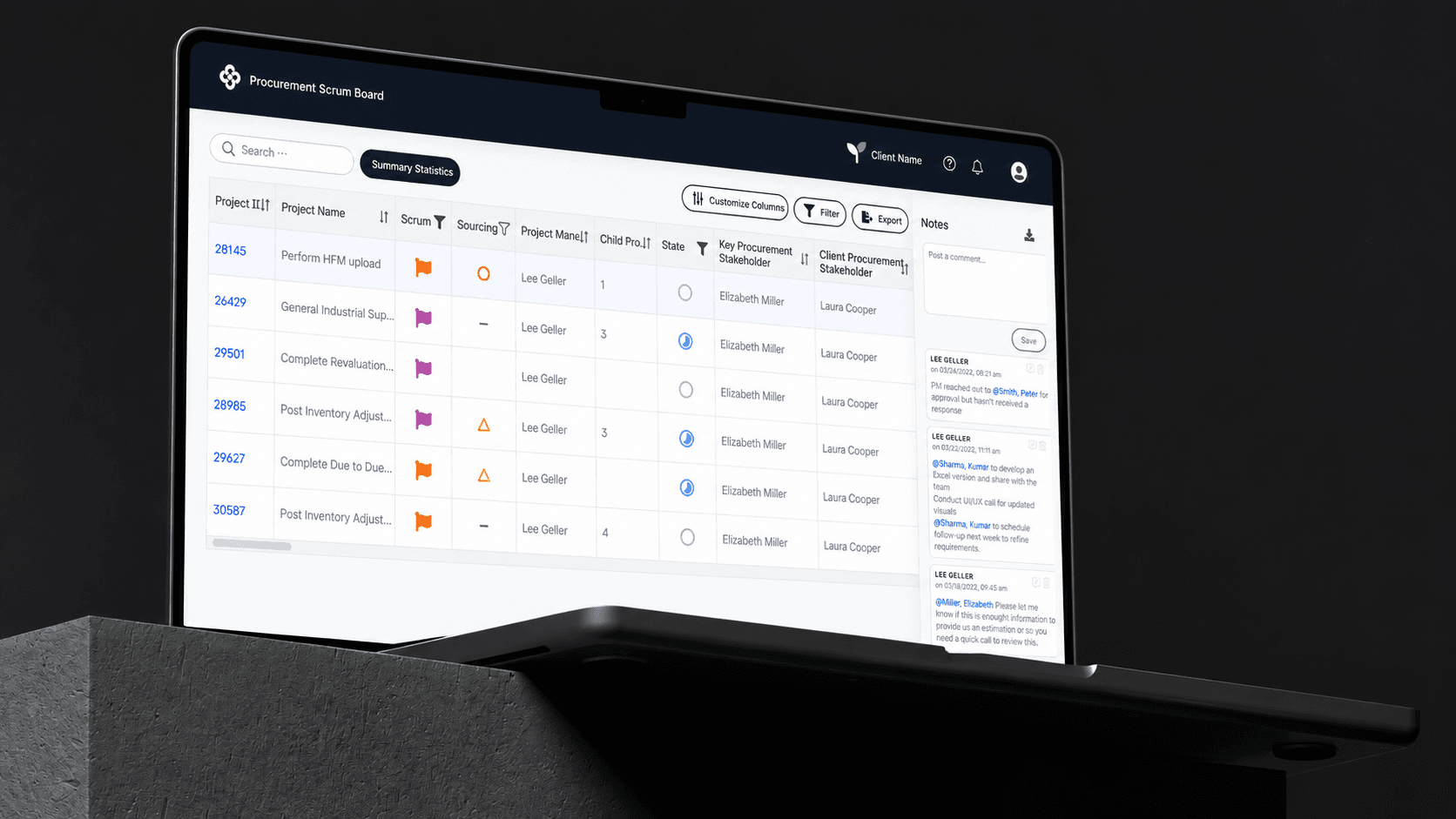
Overview
The procurement platform held the information managers needed, but their scrum calls happened somewhere else. Each team kept its own spreadsheet, updated it by hand and used it to run the call. While that sheet was the real working space, the data behind each decision lived outside the product.
Challenge
For the business, the spreadsheets led to decisions made with outdated or duplicated information. Call time also went to updating cells instead of clearing blockers. For managers, the sheet was fragile, with manual updates and limited collaboration. They still liked it because it was flexible and quick to scan. A rigid screen would have sent them back to Excel, so the board had to keep the parts of the spreadsheet that worked and fix the parts that didn't.
Approach
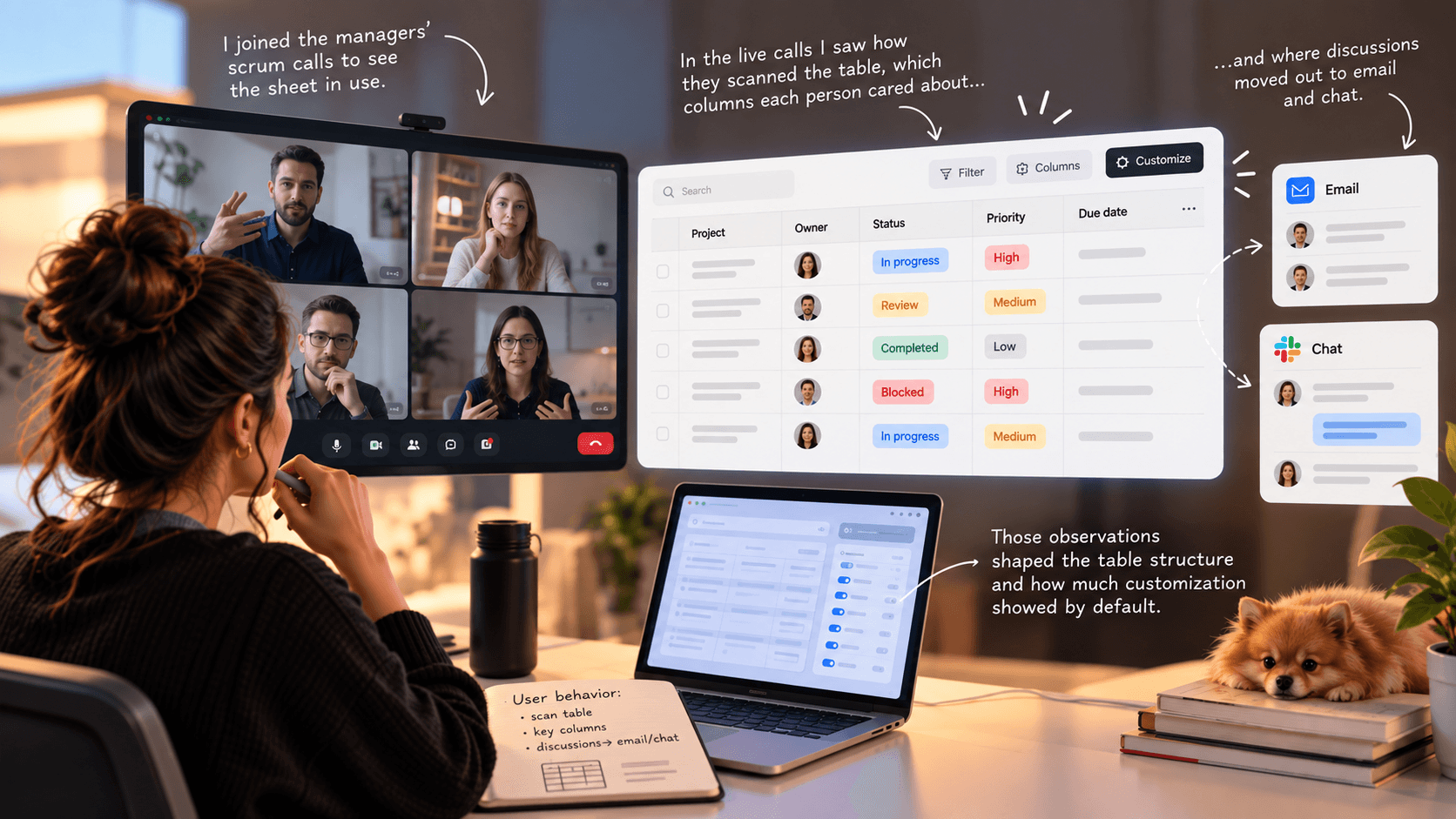
I joined the managers' scrum calls to see the sheet in use, then ran usability evaluations with them as the design took shape. In the live calls I saw how they scanned the table, which columns each person cared about and where discussions moved out to email and chat. Those observations shaped the table structure and how much customization showed by default.
Key decisions
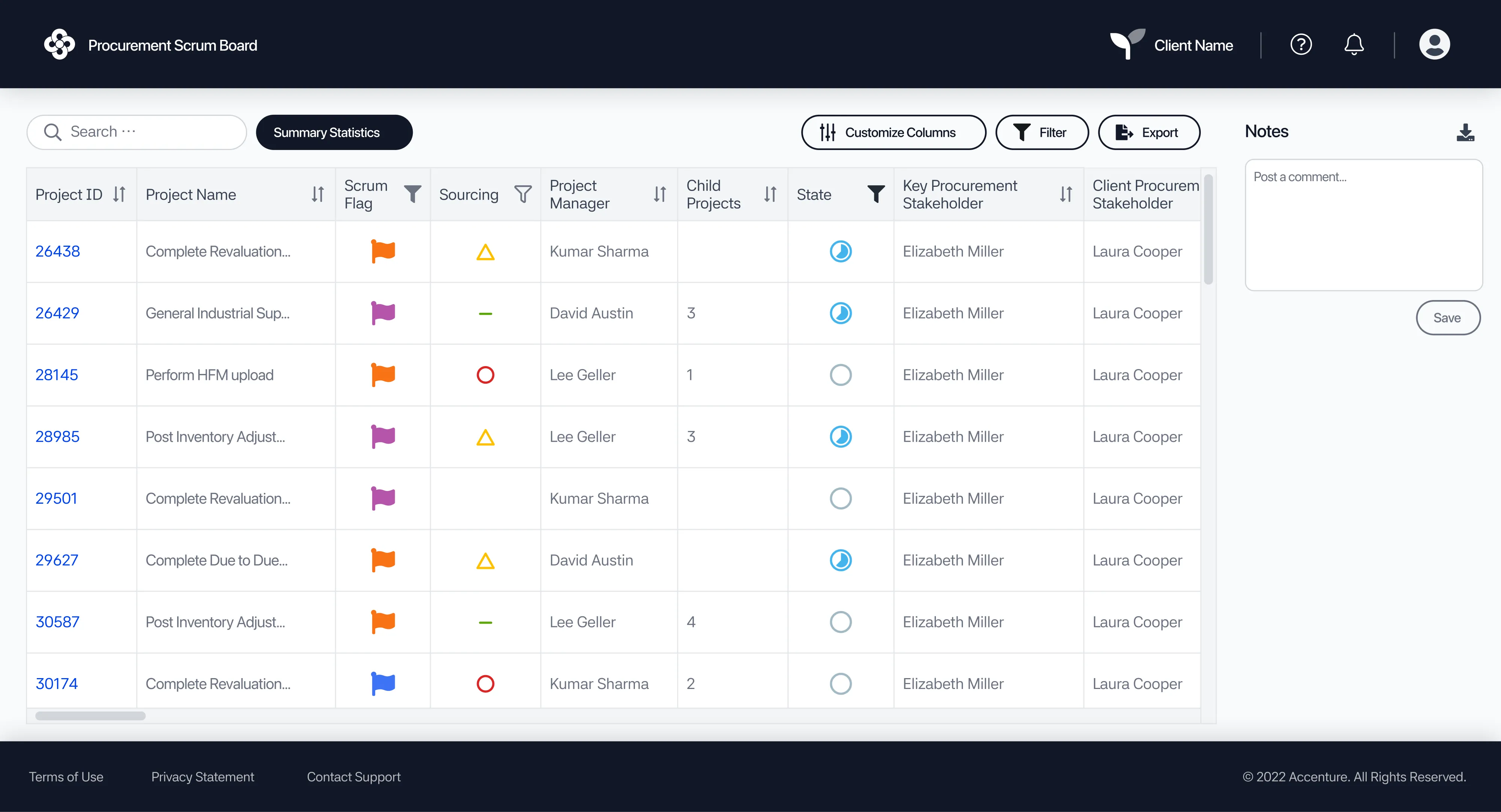
A spreadsheet-like table as the base.
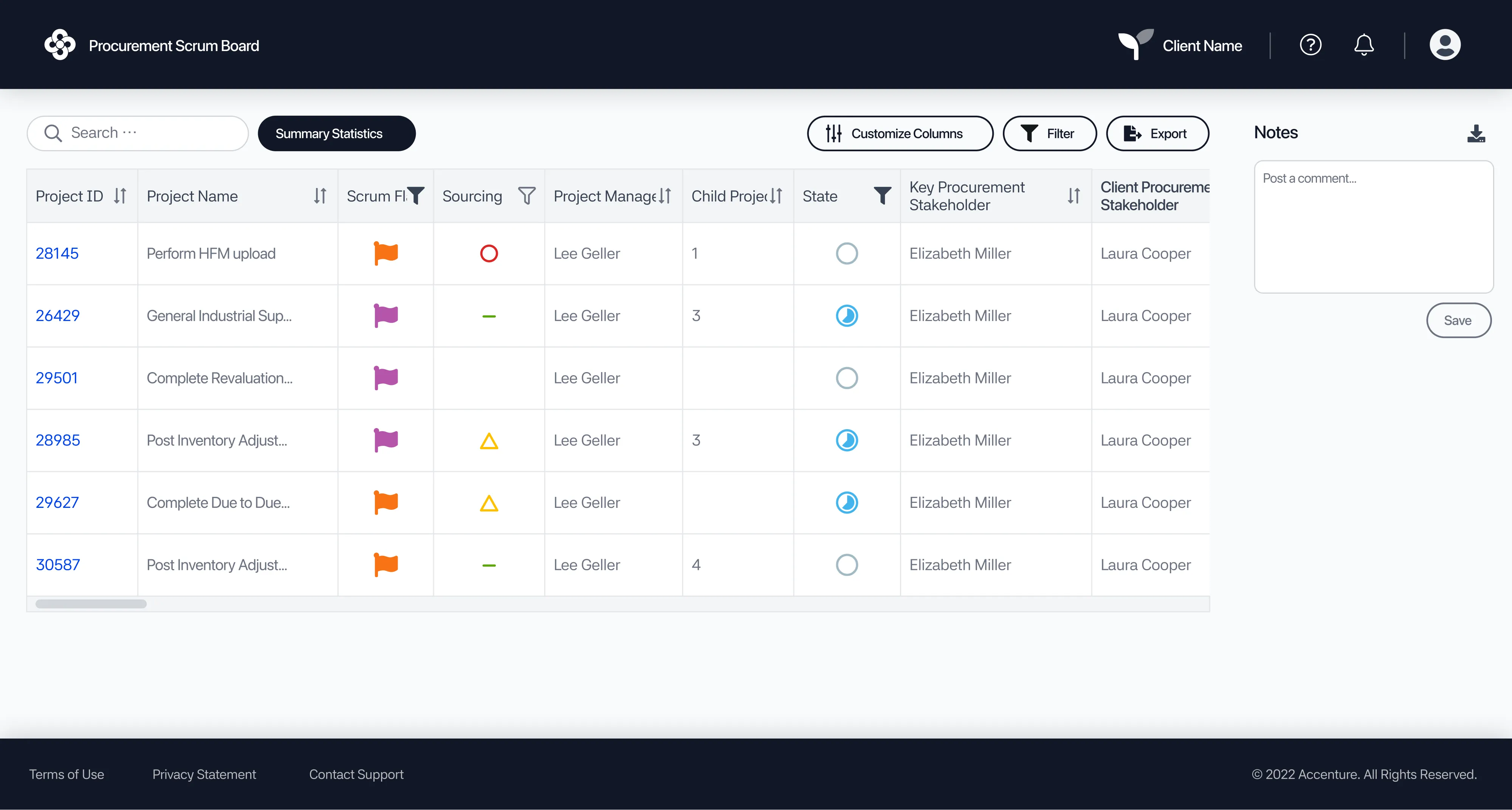
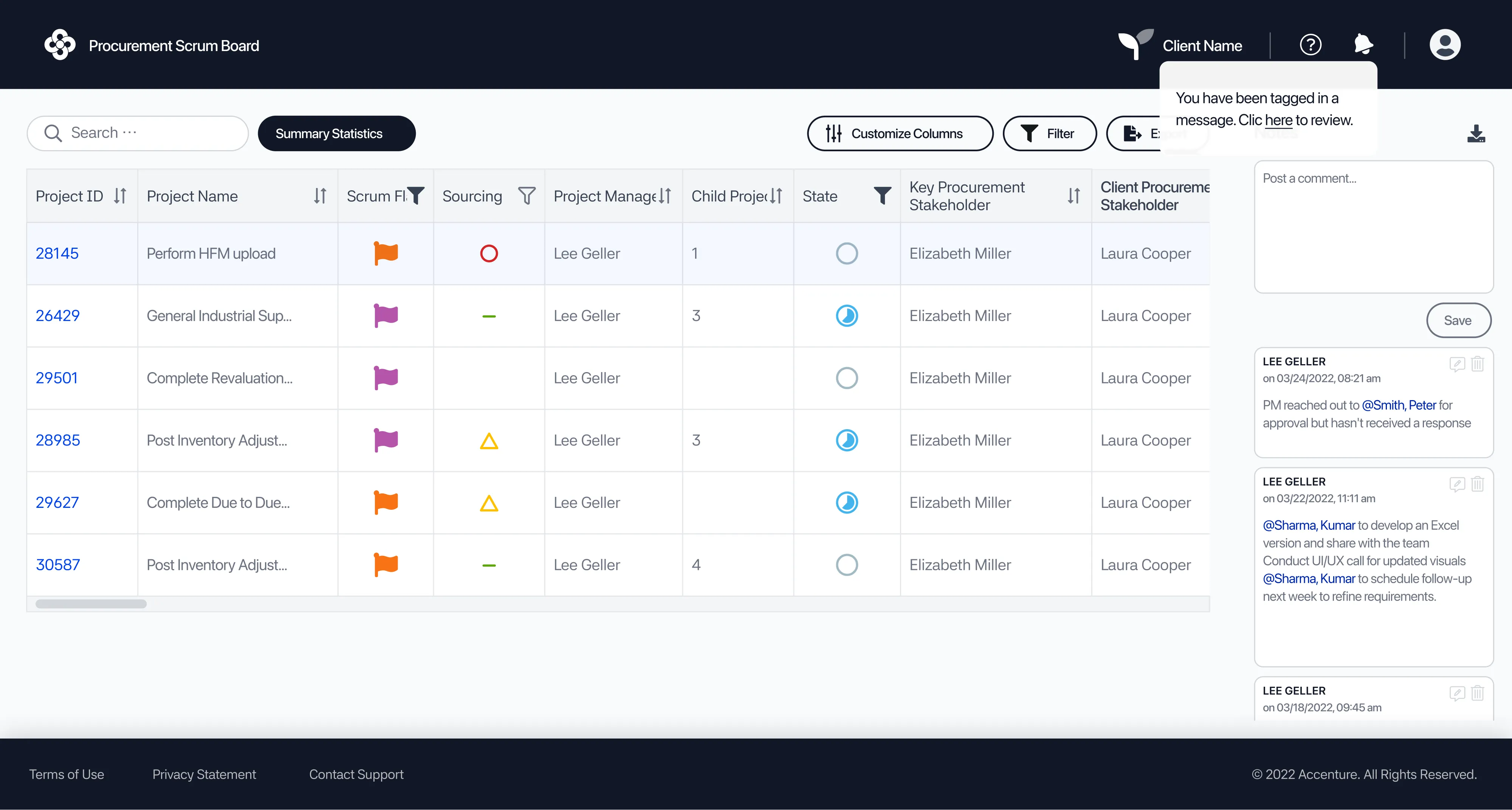
I kept an editable grid close to what managers already used, so moving into the platform didn't mean learning a new way of working.
Custom filters.
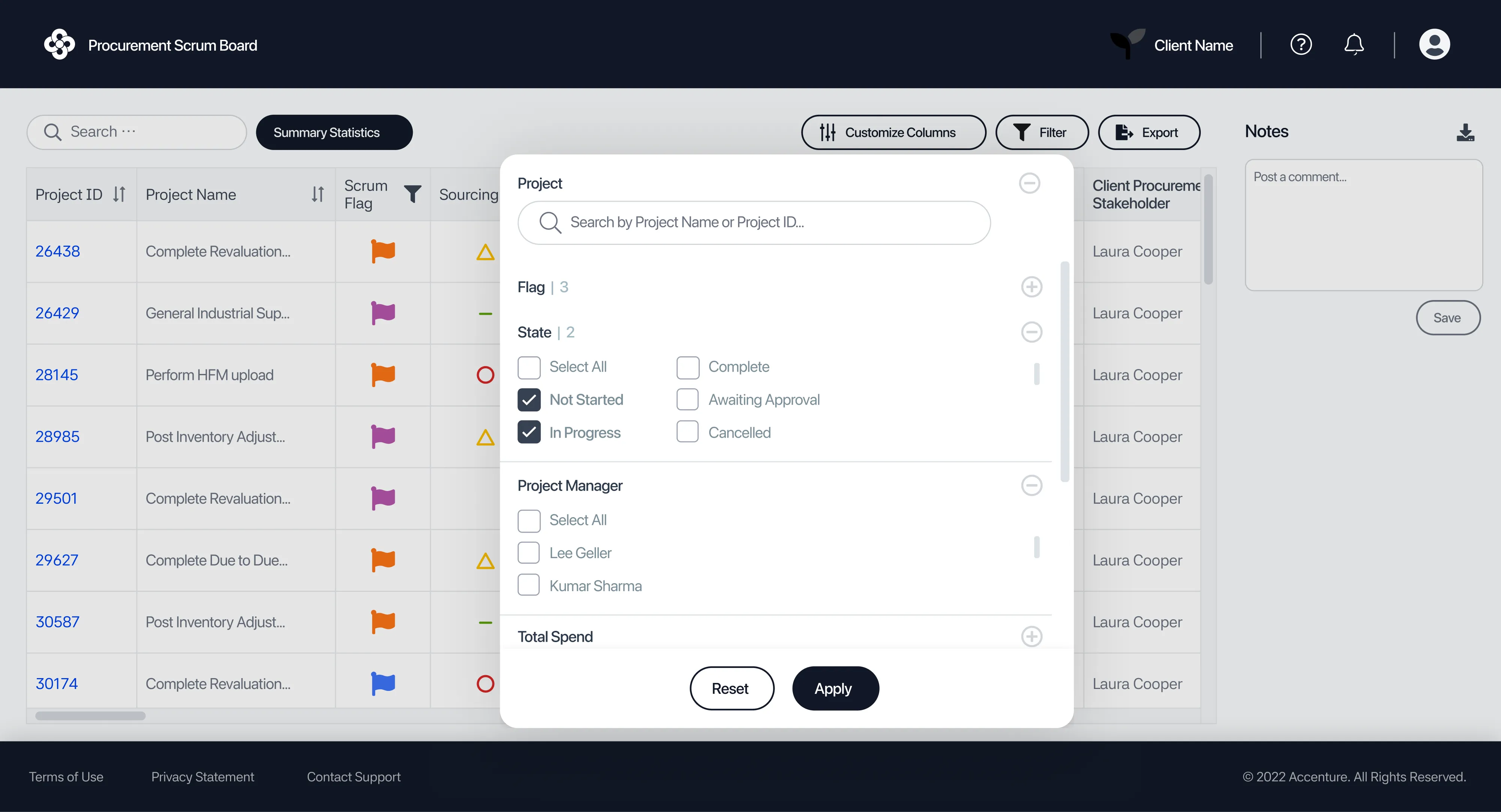
Each manager reviews a different slice of work during the call. I let them filter by what they own instead of scrolling one shared sheet.
Configurable columns.
Managers can show, hide and reorder columns. The default view stays simple and the settings sit one step away. That trade-off kept the flexibility without cluttering the view for everyone.
Comments on the row.
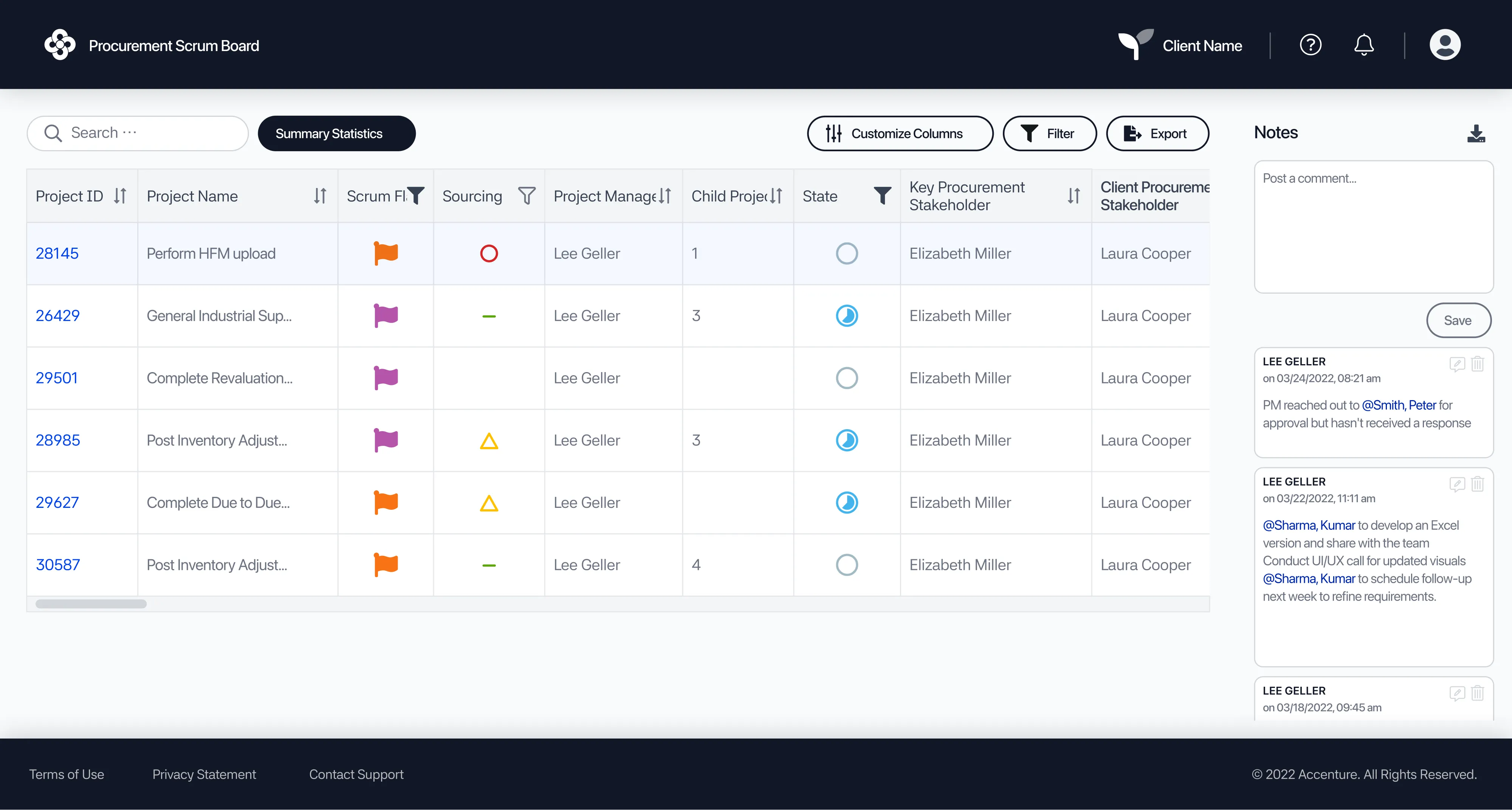
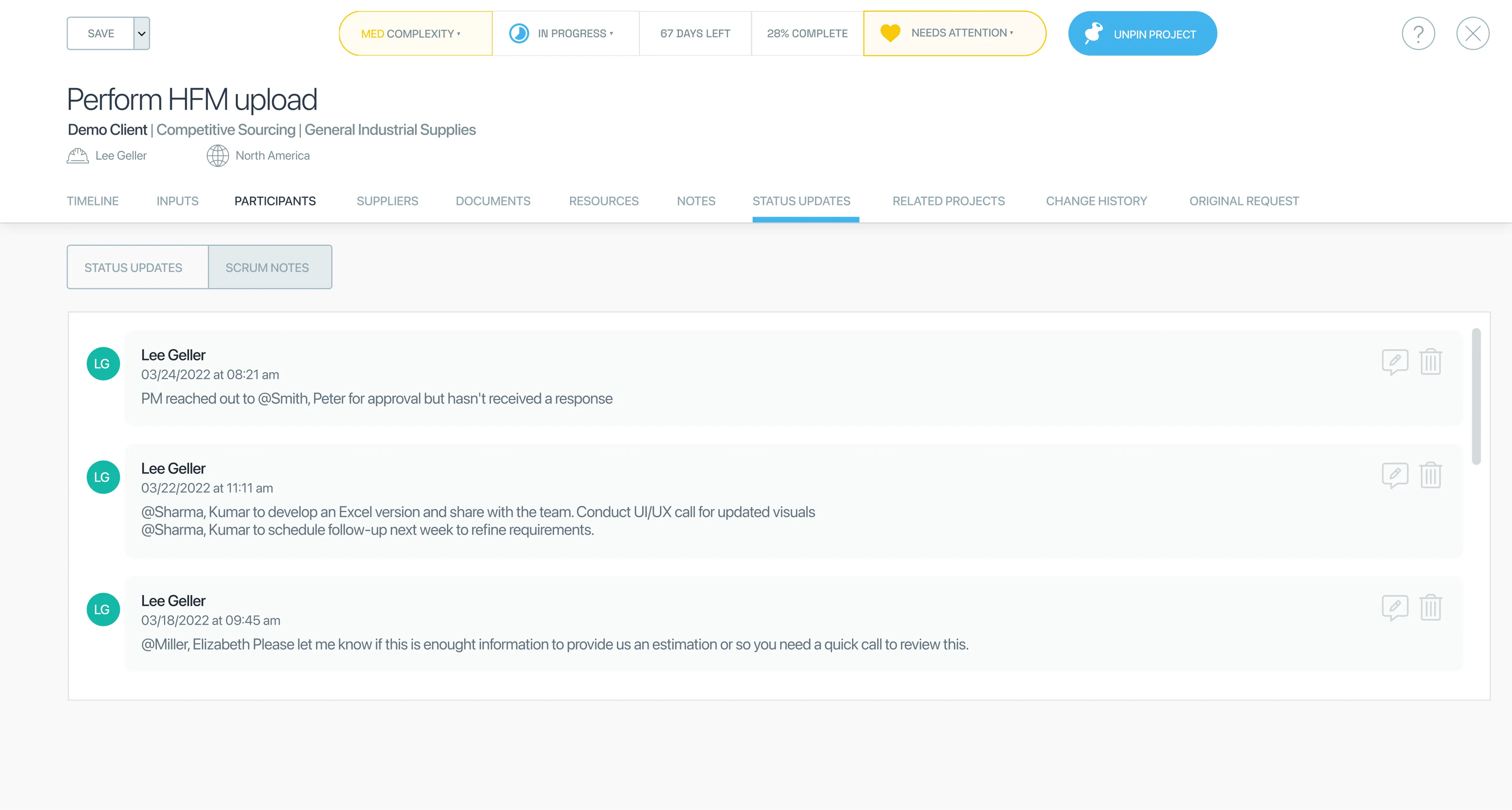
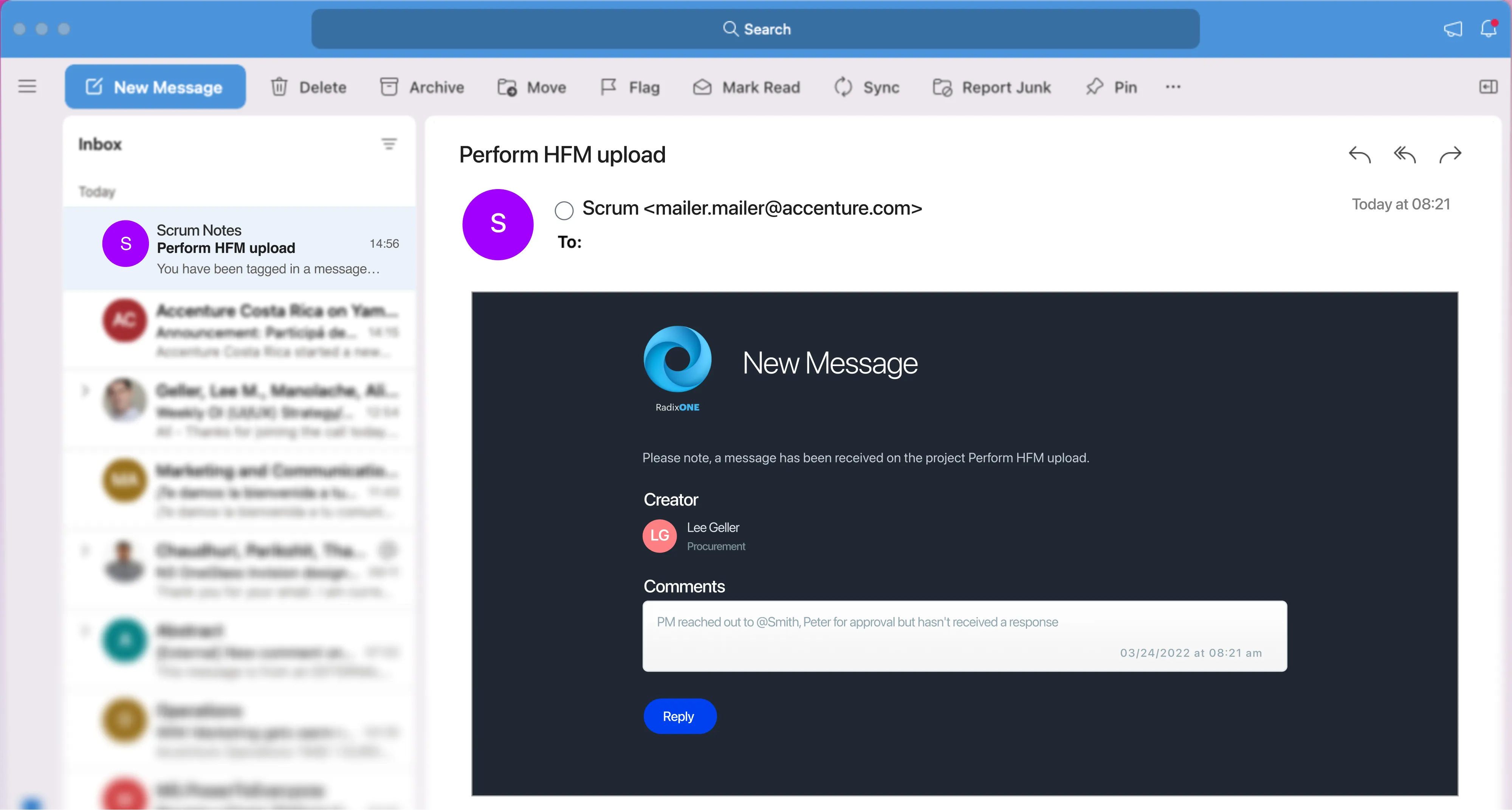
Conversations about an item were moving to email and chat. Attaching comments to the row kept that context next to the data, during the call and after it.
Outcome
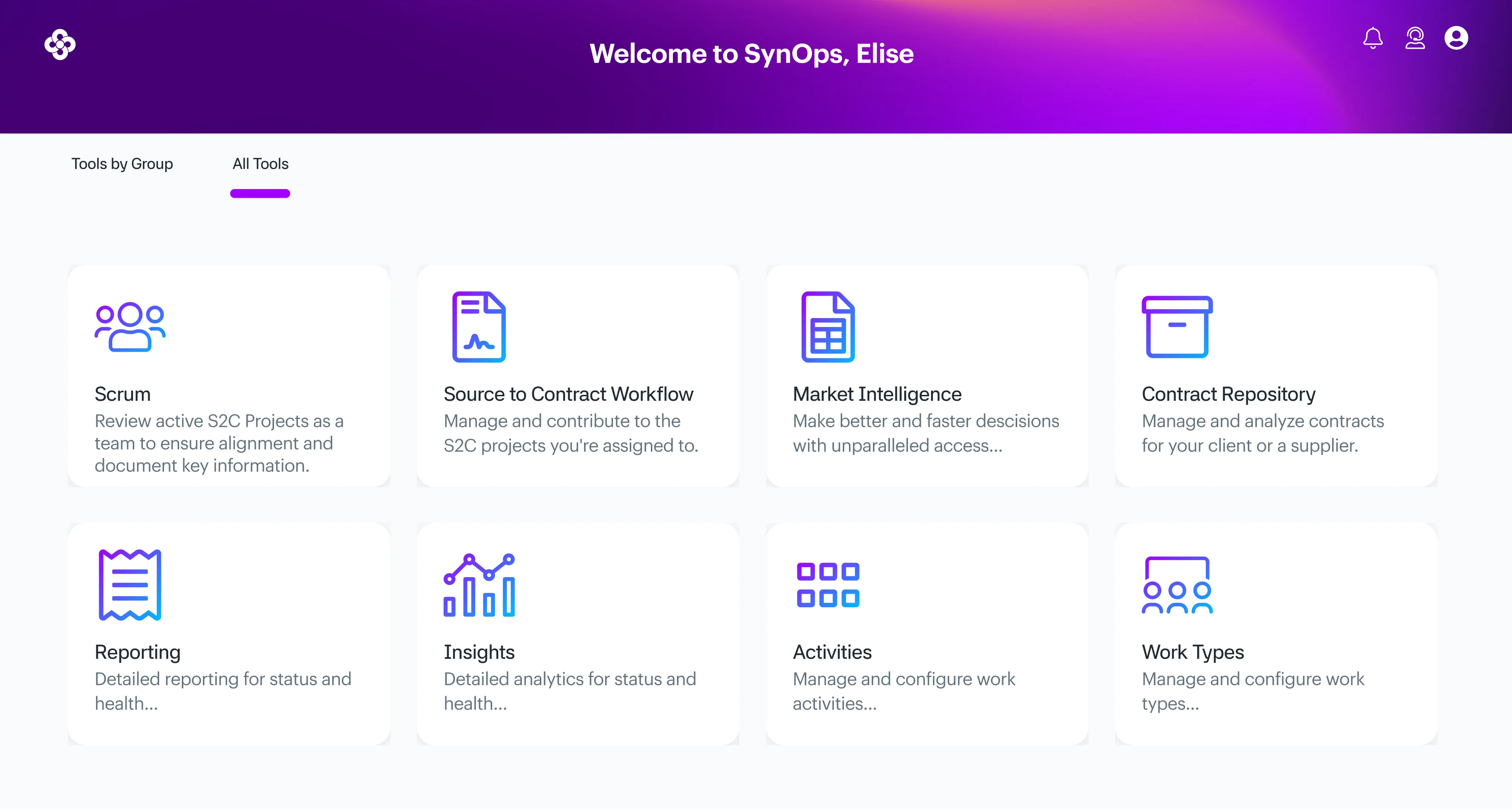
The board launched inside the procurement platform. Managers got one place to run their calls without switching tools. They no longer had to copy data by hand before each session, and the whole team worked from the same current status.
What I learned
When people already depend on a tool, I get further by designing on top of their mental model than by fighting the habit. Sitting in the real calls taught me that, and it surfaced details an interview alone would have missed.