
Overview
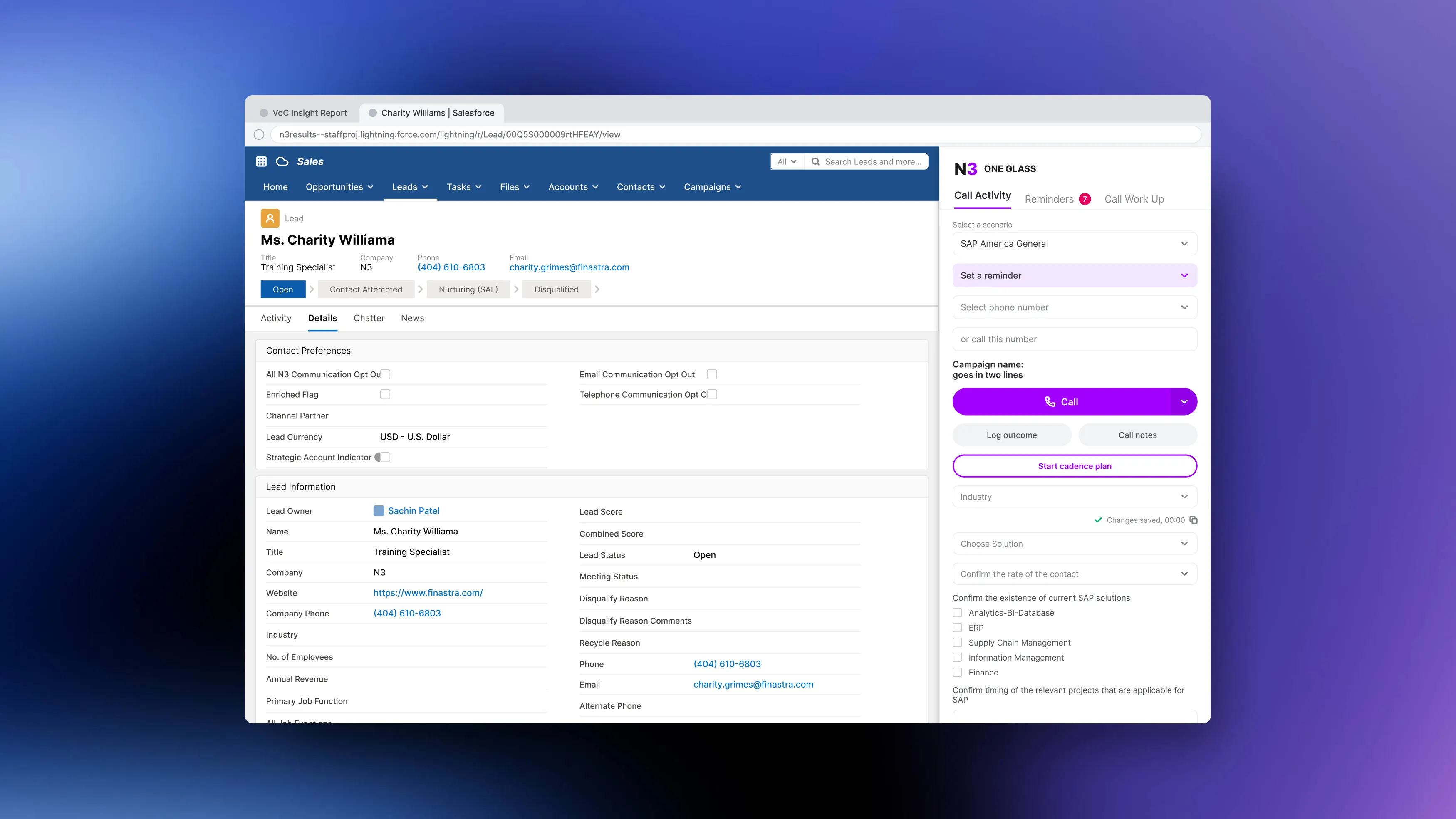
N3 is a B2B sales firm that sells cloud, software and 5G solutions for brands like Microsoft, Cisco and SAP. Its model pairs specialized agents with AI-generated customer insights. After Accenture acquired N3 in 2020, the tool agents use to read those insights became central to the business.
Challenge
The tool was working against the agents. It went down without warning, reminders never reached them, and saved call outcomes couldn't be edited. The navigation didn't follow the order in which agents actually worked. The AI assistant, MIA, went mostly unused, because agents didn't trust its voice recognition and its pre-call information repeated what was already in the CRM. For the business, this meant the AI layer at the core of N3's model was being skipped on every call.
Approach
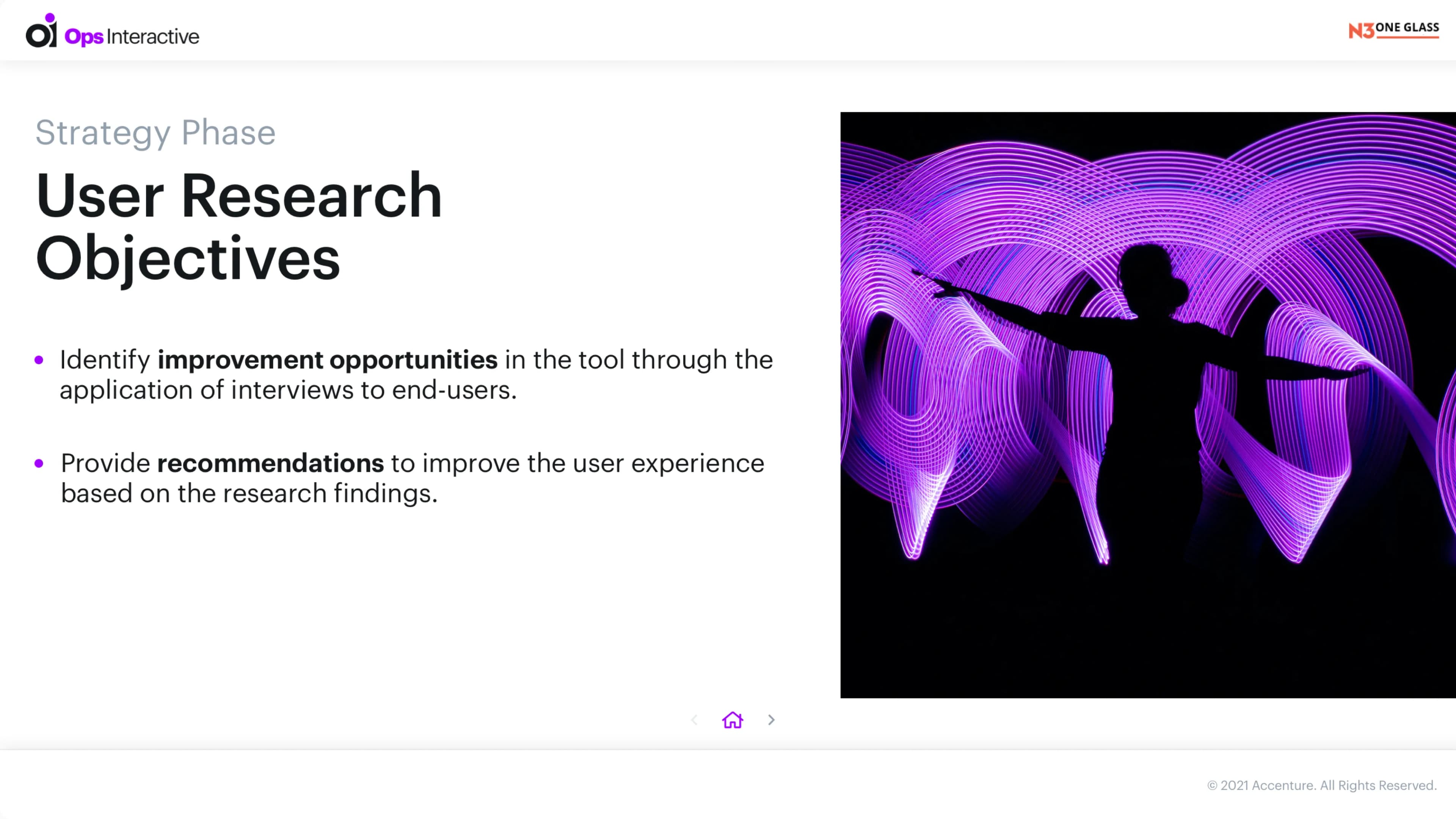
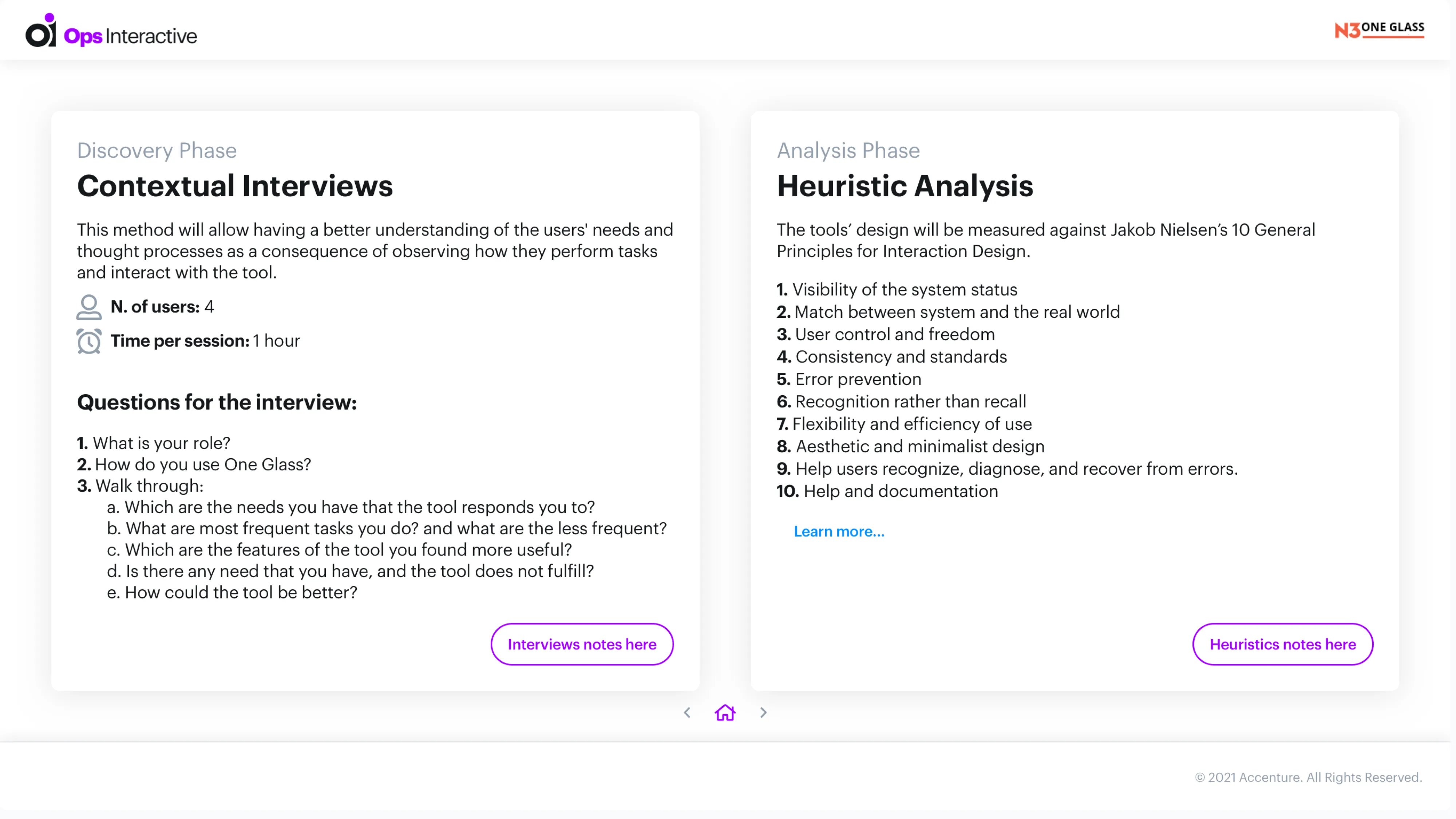
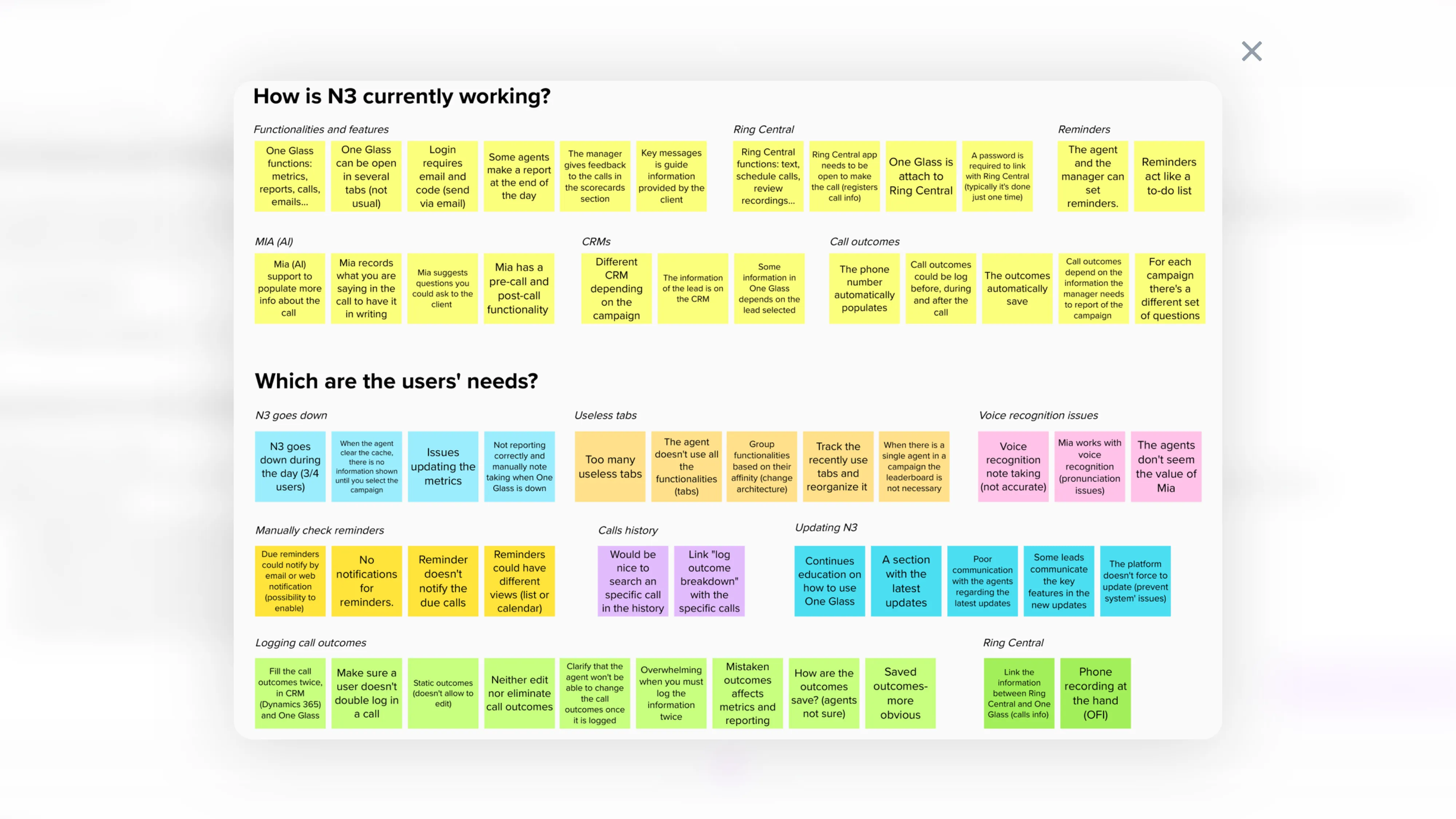
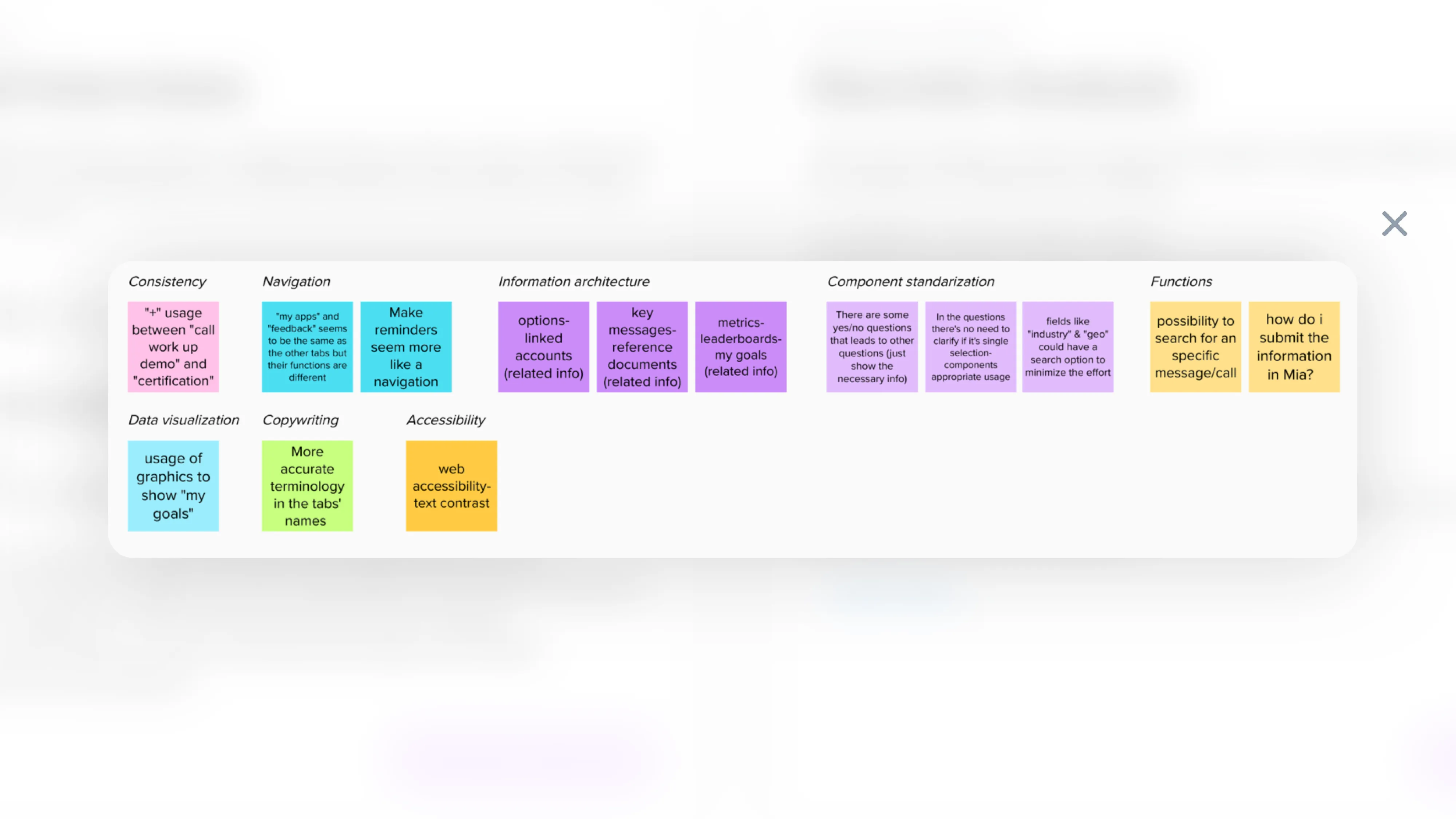
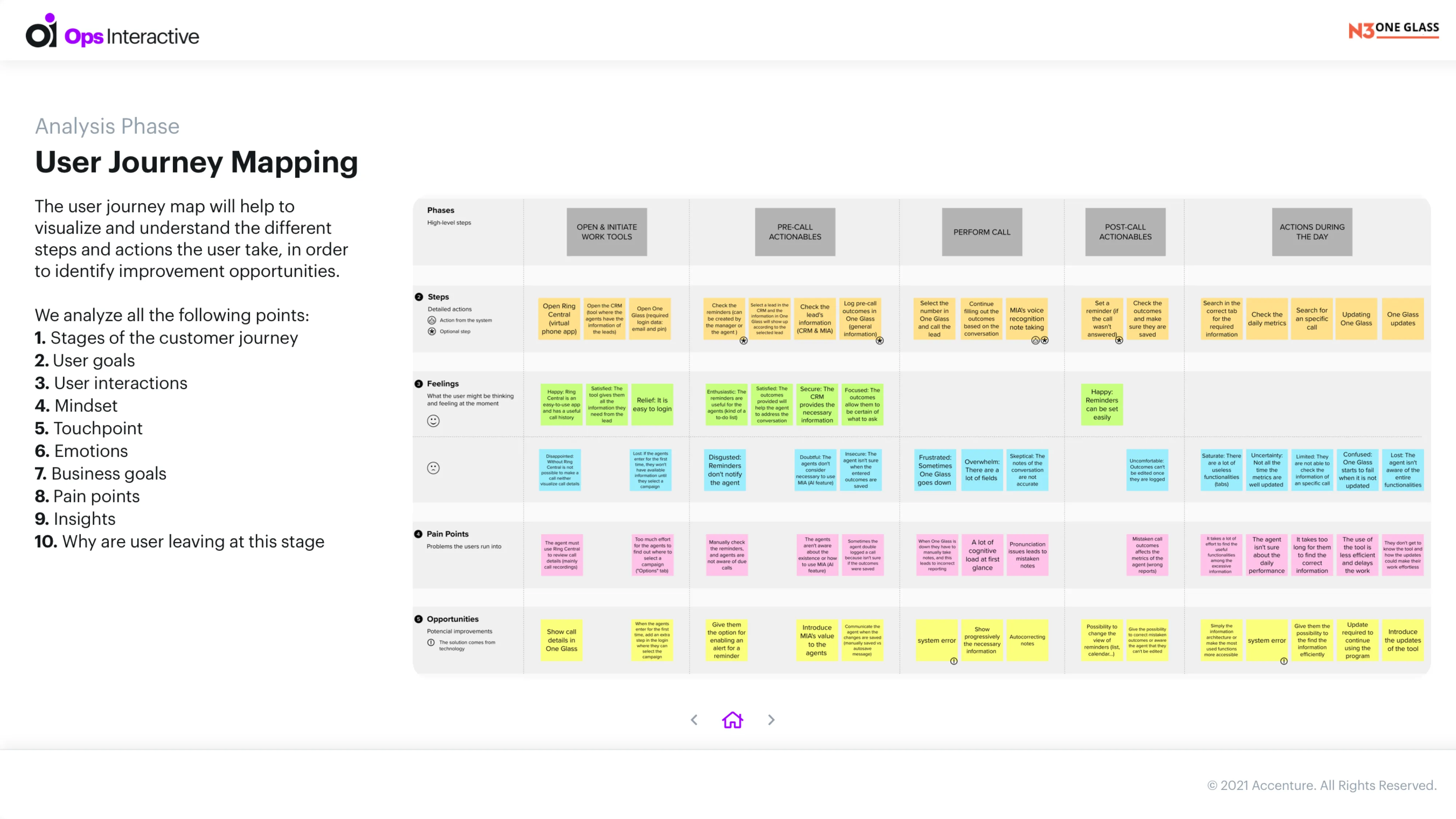
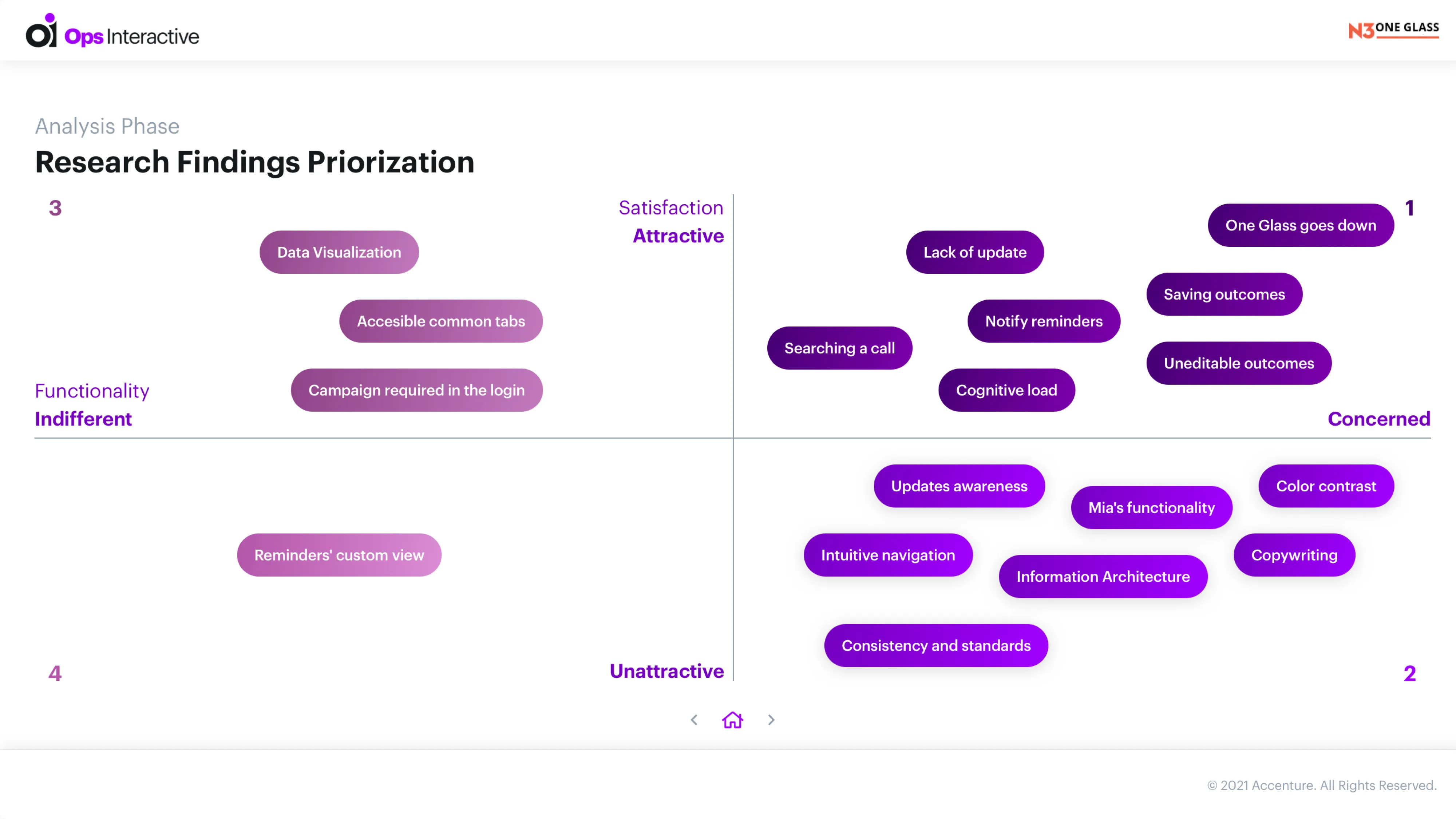
My UX research partner and I ran one-hour contextual interviews with four agents, and she ran a heuristic review against Nielsen's 10 principles. We mapped a five-phase journey, from opening the tool to post-call actions, and ranked the findings on a satisfaction and concern matrix. System reliability and saving outcomes came out on top. I then turned those findings and her wireframes into the final interface, keeping the structure the research had validated.
Key decisions
Make system status visible.
A redesign can't fix outages. It can stop them from catching agents off guard, so connection status stays in view and agents know whether the tool is working before a call starts.
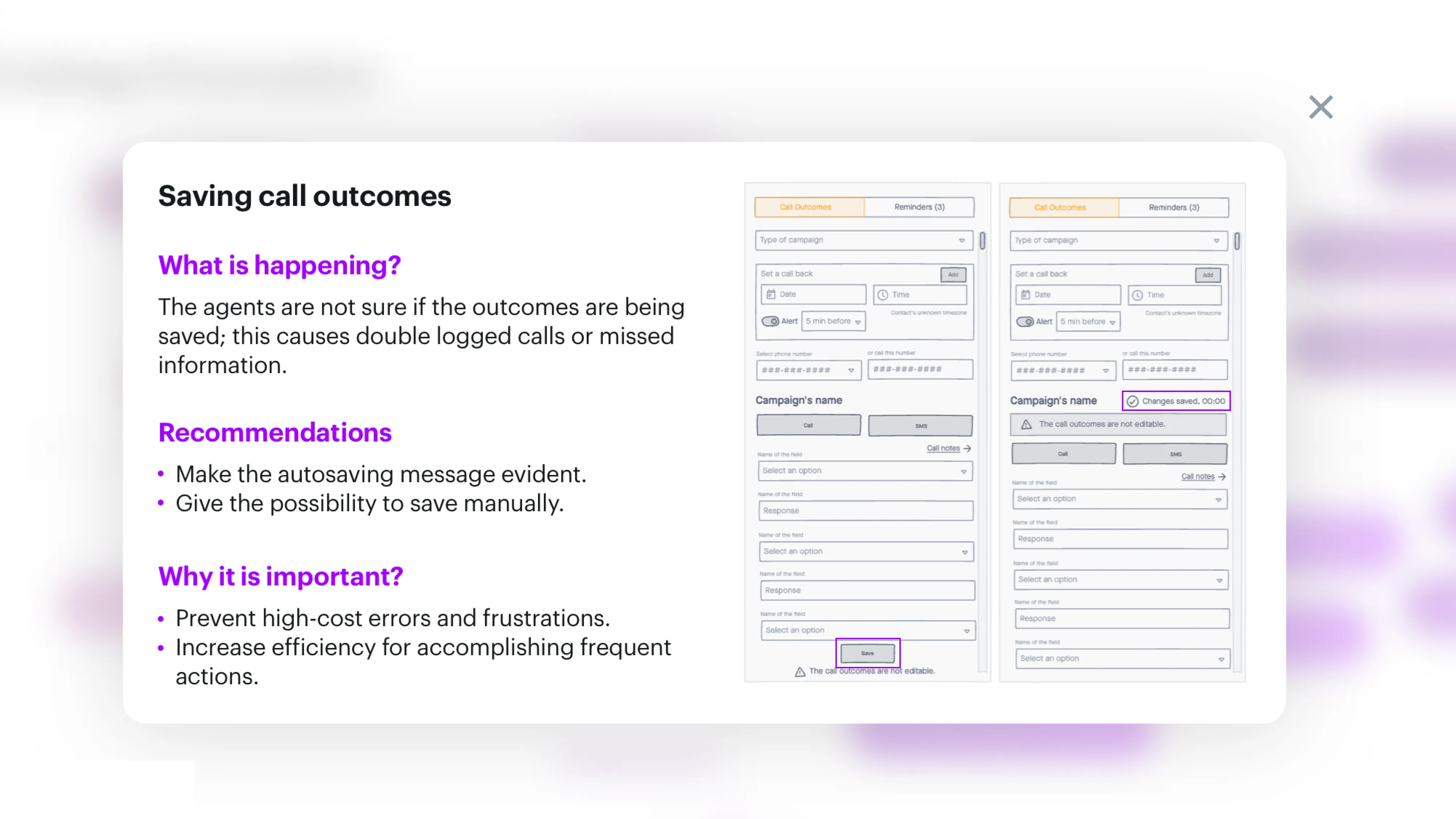
Let agents edit outcomes after saving.
Locked outcomes were one of the two most critical issues. Saved outcomes can be reopened and corrected, so a mistake no longer stays in the record.
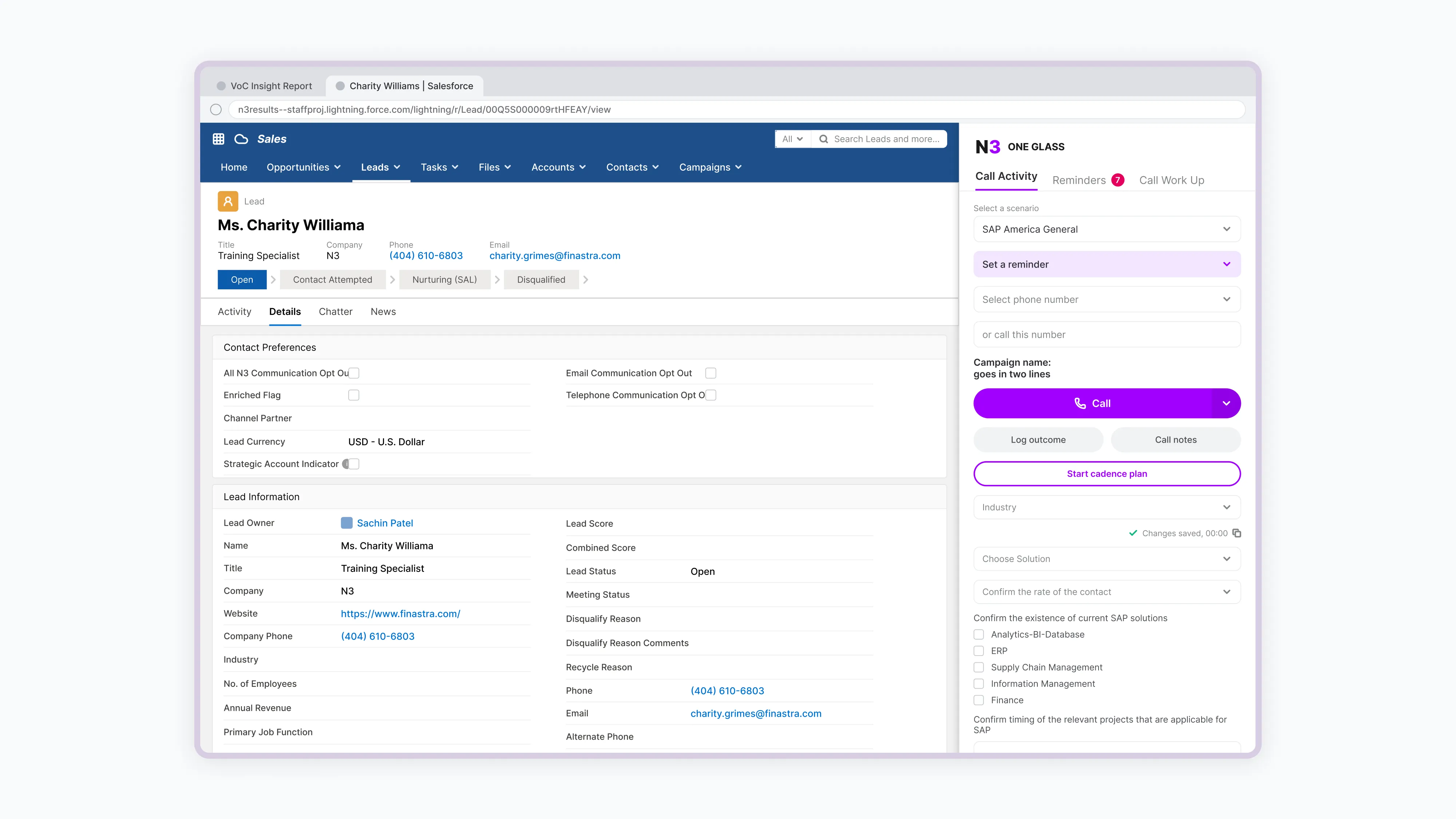
Show only what the CRM doesn't.
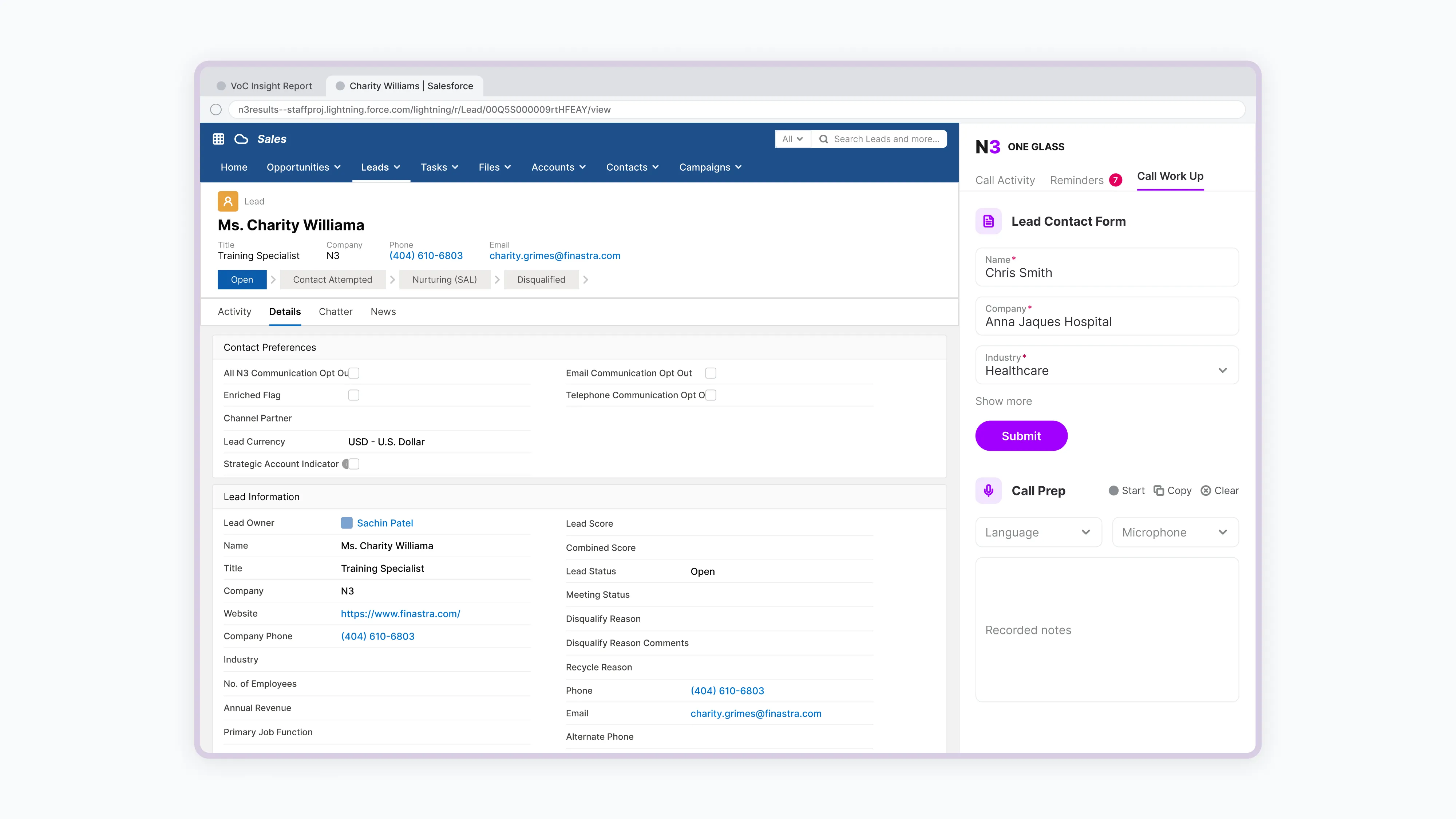
MIA's widgets show insights agents can't find anywhere else, and voice input is optional. The trade-off is that the AI takes up less space on screen, but whatever does appear earns a look.
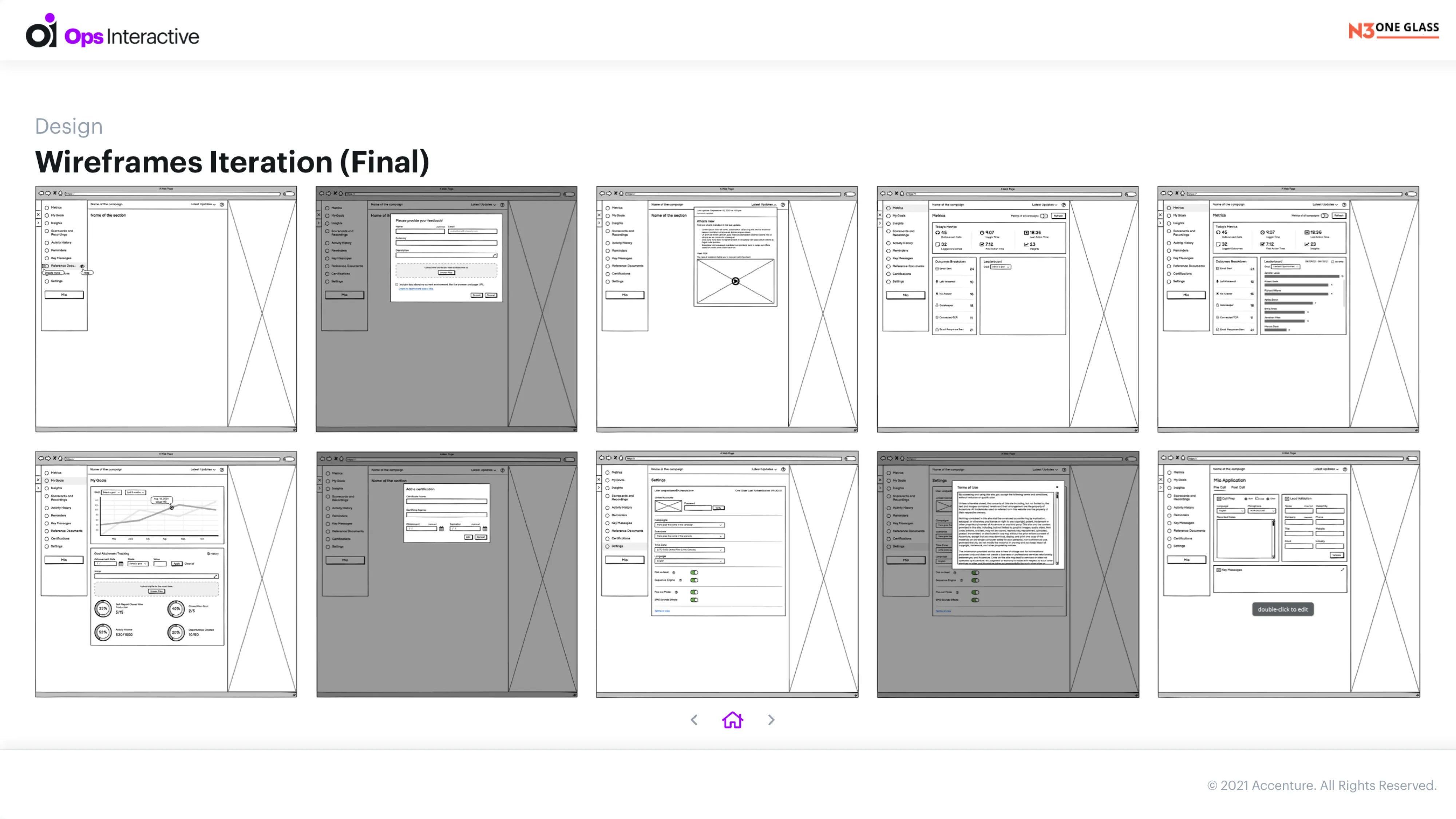
Order navigation by the call journey.
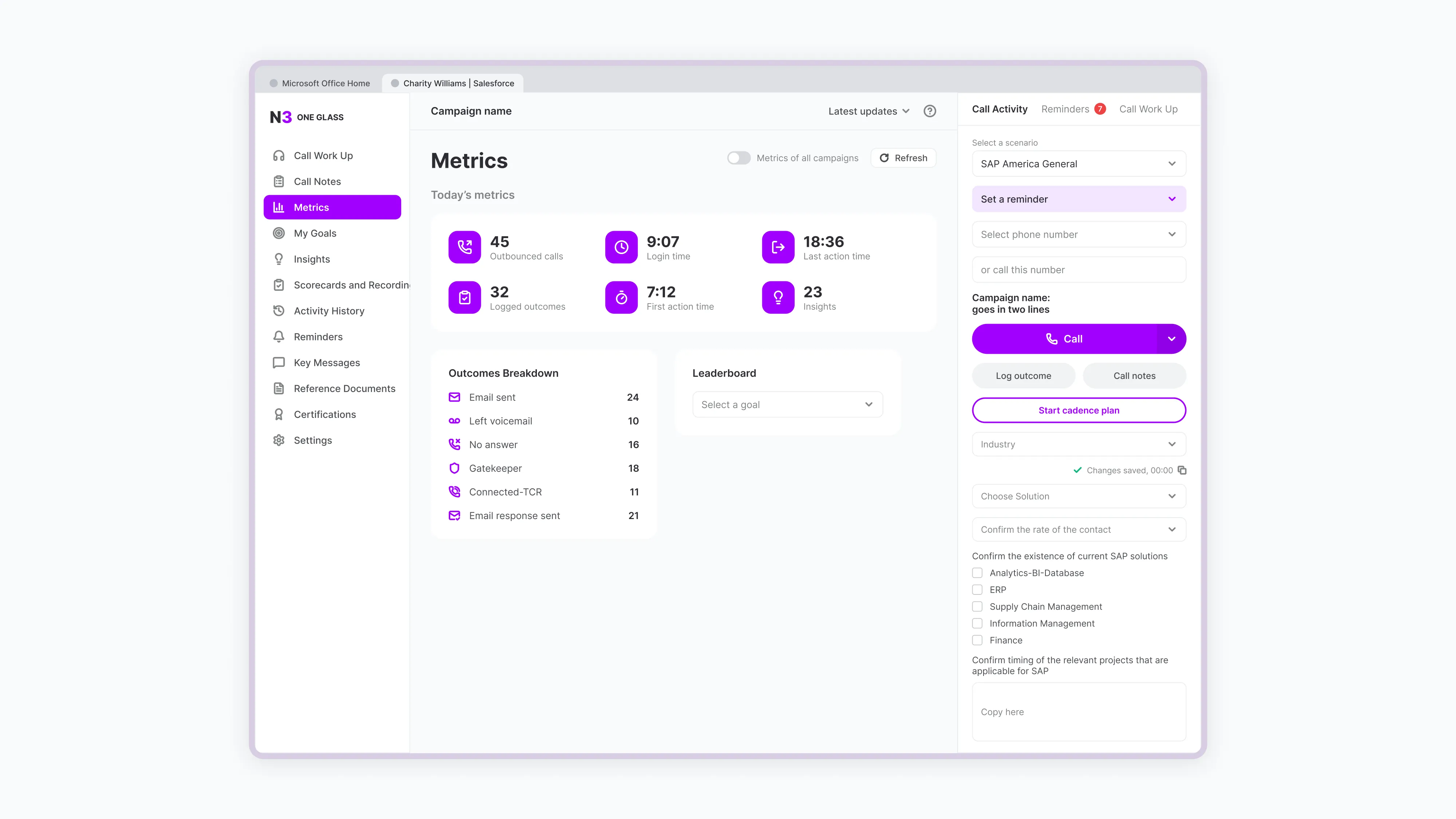
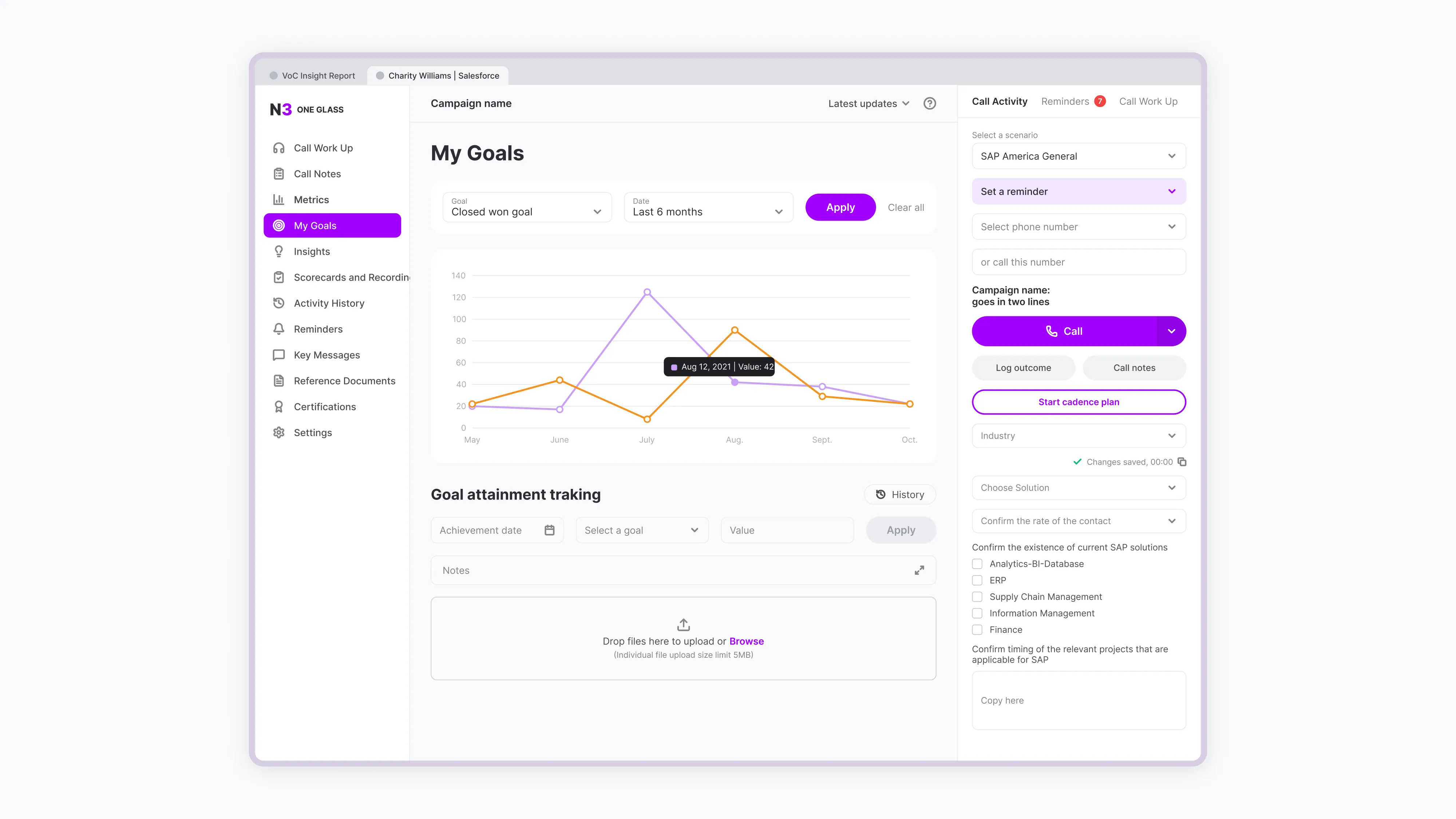
Sections follow the five phases from the journey map, so agents move through the tool in the same order they move through a call.
Outcome
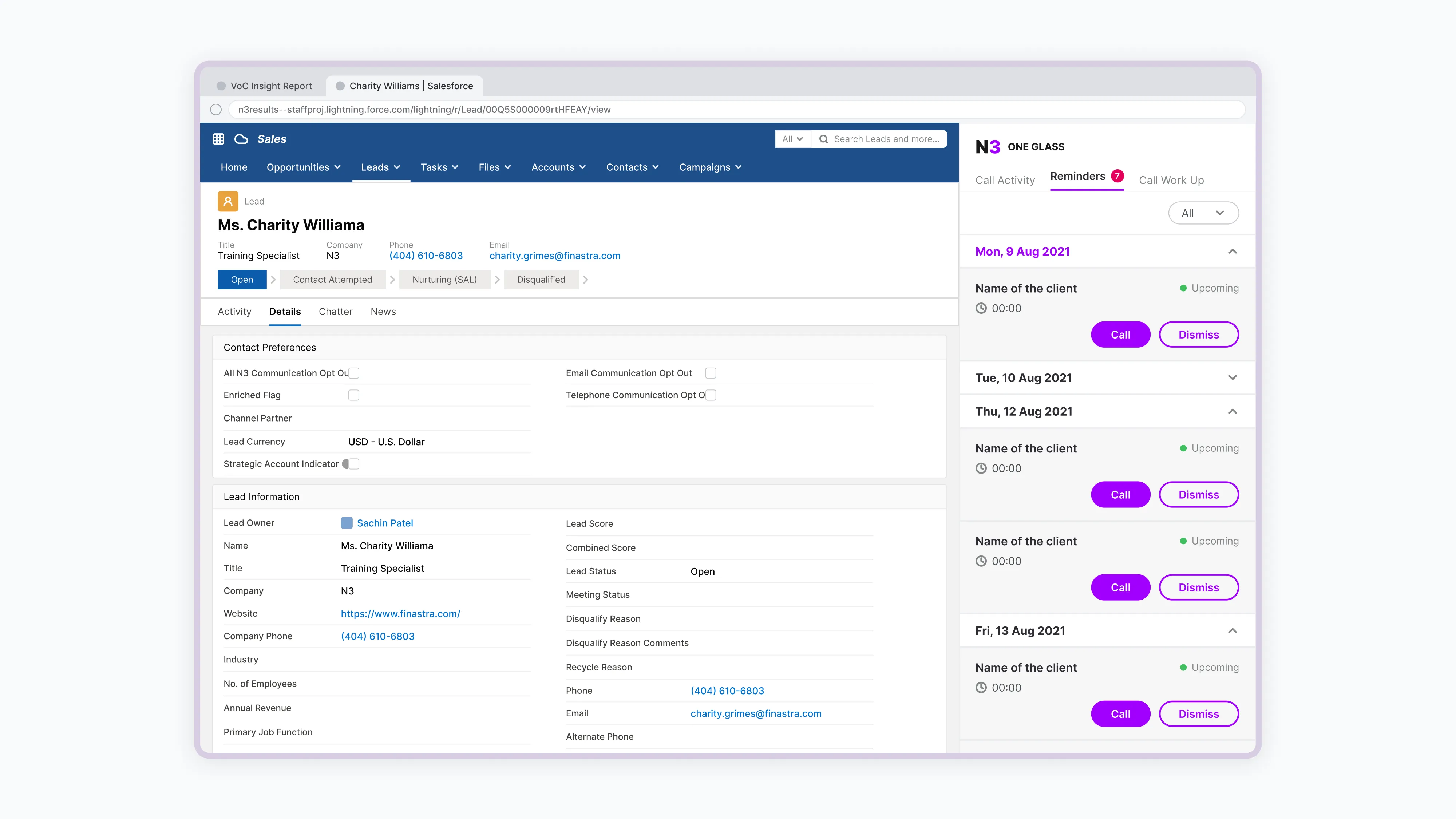
We delivered a production-ready interface that addressed the top findings from the matrix, with AI widgets built into the pre-call view instead of added on top of it.
What I learned
- 01I expected MIA to be the feature agents cared about most, but in the interviews they barely used it.
- 02They didn't trust a tool that went down without warning, and that distrust carried over to the AI layer on top of it. Now I make the base reliable before I add AI.
- 03Looking back, I'd test the final interface with the same four agents before handoff.
Due to confidentiality agreements, certain details have been modified or omitted.